Walk-in cooler & freezer repair — protect your inventory.
Restaurants, grocers, hotels and food-service across Howard County, Baltimore & DC. Call to confirm emergency availability.
Family-owned Appliance Repair Technology Experts — 15+ years in Laurel, MD. Serving Howard County, Columbia, Ellicott City, Baltimore & DC Metro.
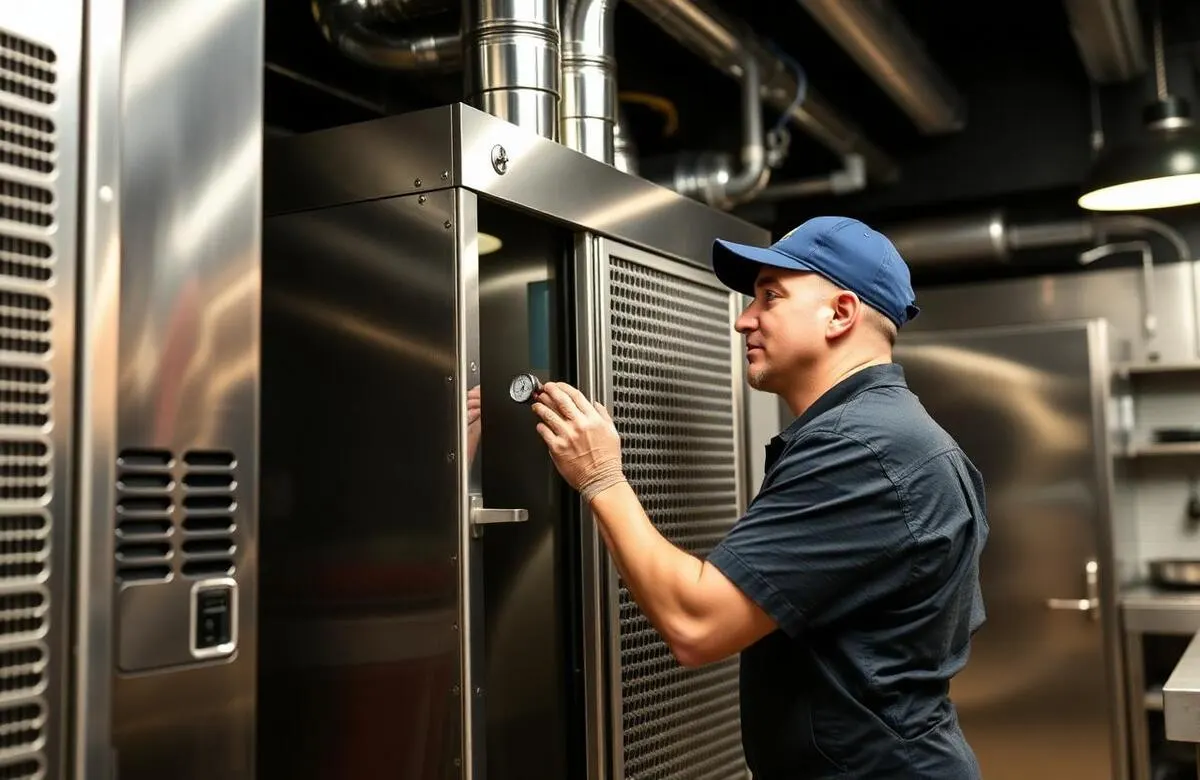
Watch: Walk-in cooler & freezer repair in DC, Baltimore & Laurel MD
See how our local technicians diagnose and repair commercial walk-in units — fast, reliable solutions for restaurants, grocers and food service.
Walk-in services we provide
- Not cooling / not freezing diagnosis
- Compressor & condenser replacement
- Evaporator coil & defrost repair
- Refrigerant leak detection & recharge
- Door gasket, hinge & sweep replacement
- Thermostat & EPR valve service
- Drain line & ice build-up clearing
- Preventive maintenance contracts
Brands we work on
Manitowoc · Follett · True · Turbo Air · Beverage Air · Utility · KeepRite · Summit · Kool-It and most major commercial refrigeration brands.
Walk-in cooler troubleshooting: icing, cycling and door seals
Start with the box temperature, controller alarms and the unit's brand, model and serial number. Record when the problem began and whether it follows deliveries, door openings or a defrost cycle. These observations narrow the diagnosis; a symptom alone cannot confirm a failed part.
Protect inventory and keep checks safe
Keep the door closed and follow your site's food-safety plan for temperature monitoring and transfer to working cold storage. An air-temperature display alone does not establish that food is safe. Do not remove electrical covers, reach through fan guards, open refrigerant lines or bypass controls. Burning smells, repeated breaker trips or suspected refrigerant leaks require stopping use and qualified assistance.
1. Evaporator icing or weak airflow
Ice across the coil can restrict airflow and leave the box warm even while the compressor runs. Common possibilities include humid air entering at the door, obstructed airflow, a defrost fault or a blocked drain; the ice pattern alone is not a refrigerant diagnosis.
- From outside the guarded unit, note where ice appears: on the coil, drain pan, floor or around the doorway. Photograph it before it melts.
- Check that the door closes completely and that strip curtains are intact. Move stored cartons away from the evaporator's intake and discharge, following the unit's specified clearances.
- Record any defrost alarm and whether the ice returns after a normal defrost cycle. Cooler and freezer defrost methods differ; use the exact controller manual rather than changing timer settings by guesswork.
- Do not chip ice, apply a torch or force a defrost with improvised heat. A technician can check defrost controls, heaters where fitted, fan operation, drainage and refrigerant conditions after safe isolation.
2. Compressor short cycling or repeated restarts
Some cycling is normal at setpoint or during a designed pump-down sequence. Repeated brief starts with poor cooling, alarms or overload trips deserve investigation, not repeated resets.
- Log start and stop times, displayed temperature, setpoint and alarms. Note whether cycling occurs with the door closed or immediately after defrost.
- Check accessible external condenser vents for packaging, grease or other obstructions. Keep the manufacturer's airflow clearance; leave guarded fans and electrical compartments closed.
- If the controller is accessible, record its settings without changing pressure controls or forcing relays. Report recent power interruptions or control changes.
- If there is a burning smell, repeated breaker trip or visibly stalled fan, stop using the system and seek service. A qualified technician can test supply voltage, starting components, controls and operating pressures before recommending a compressor replacement.
3. Door seal failures, condensation and doorway frost
A damaged seal or misaligned door lets warm, moist air into the box. That extra load can cause condensation, frost near the opening and longer compressor run times.
- Inspect the gasket around the full perimeter for tears, flattened areas and debris. Clean it using the door manufacturer's approved method.
- Close the door gently on a strip of paper and compare resistance at several points. Loose spots suggest uneven contact, but also check for sagging hinges or an obstruction.
- Observe whether the closer latches the door without a push. Check that the sweep and strip curtains are not damaged or holding the door open.
- Give the technician the door or box manufacturer's details for a correctly fitting gasket. Persistent freezer-door frost may also need a door-heater inspection; electrical heater work is not an operator check.
When to request walk-in cooler repair
Seek service if temperature continues rising, ice quickly returns, cycling prevents cooling or the door will not seal. Have the model and serial, alarm photos, temperature log and recent maintenance history ready. On-site repair is local to our MD & DC service area; call to confirm emergency availability rather than assuming an overnight response.
For a deeper checklist, read our walk-in cooler troubleshooting guide. FixGrid Academy offers online repair training worldwide, separate from local on-site service.
Technical reference: Heatcraft Unit Coolers installation and operation manual (defrost, drainage and evaporator troubleshooting). Follow the manual for your exact equipment; this general guide does not replace qualified service.
Related commercial repair guides
- Commercial freezer repair → reach-in, chest & walk-in freezer DIY guided repair + same-day local service.
- Commercial refrigerator repair → reach-ins, prep tables, display cases and undercounter units.
AI Diagnostics + DIY guides
Run a free Maya AI diagnosis in 60 seconds, or grab a $79 DIY Repair Pass if your team handles repairs in-house.
FAQ
- Why does my walk-in cooler evaporator keep icing up?
- Moisture entering through an open door or damaged gasket, blocked airflow, and defrost or drain problems can cause ice buildup. Check door closure and product clearance without removing guards. Recurring ice needs a technician to inspect the defrost sequence, fans, drain and refrigeration system; do not chip ice off the coil.
- Why does the walk-in compressor start and stop repeatedly?
- Frequent cycling can come from restricted condenser airflow, control or sensor faults, pressure-control trips, or electrical starting problems. Record cycle times, alarms and box temperature, and check external vents for obstructions. Repeated breaker trips, burning smells or a stalled fan require stopping use and professional inspection; never bypass a safety control.
- How can I check a walk-in door gasket?
- Look for tears, flattened sections, debris and gaps around the closed door. Close the door on a strip of paper at several points; unusually loose spots can indicate poor contact, but the test alone does not prove the gasket is defective. Clean the seal according to the door manufacturer's instructions. A sagging door may need hinge or closer adjustment rather than only a new gasket.
- Do you respond to walk-in cooler emergencies same day?
- Call (443) 295-4865 to confirm emergency availability in our local Maryland / DC metro service area. Response depends on coverage and the available route; 24/7 dispatch is not promised.
- Can you repair walk-in freezer compressors and condensers?
- Yes. Compressor swaps, condenser fan motors, EPR valves, defrost timers, evaporator coils, door gaskets, and full refrigerant recovery & recharge.
- Do you offer preventive maintenance plans?
- Yes. Quarterly PM keeps coil coefficient up, prevents costly food loss, and extends compressor life. Ask about restaurant & grocery PM contracts.
Quick symptom check
Box temperature climbing
Likely cause: Dirty condenser or iced evaporator
Next step: Move product to backup storage, then call a tech
Ice on the evaporator or ceiling
Likely cause: Door left ajar, bad gasket or defrost fault
Next step: Check door closure and strip curtains
Condensing unit loud or off
Likely cause: Fan motor, contactor or refrigerant issue
Next step: Refrigerant and electrical work need a certified tech
When to call a professional
- • You smell gas or see scorching at a burner
- • The fix means opening the refrigerant (sealed) system
- • Breakers trip, wires are burnt or you need live-voltage tests
- • Food is above safe temperature and the unit won't recover
Enter your ZIP to see if a technician can come to you. On-site repair covers the Maryland / DC metro only.