Dryer No Heat
A dryer tumbles normally but clothes come out cold and damp. Work the vent, then the heat circuit, then the safety devices — in that order.
Scenario briefing
The call
A homeowner reports their electric dryer tumbles normally but the clothes come out cold and still damp. There is no error code on the display.
They mention loads have been taking two or three cycles to dry for a few weeks, and lately they get no heat at all. The drum turns, the timer advances, and the machine sounds normal.
Work the sequence: confirm the complaint and inspect the exhaust path, then split airflow from the heating circuit, then test the heat string with power isolated. Parts come after measurements, not before.
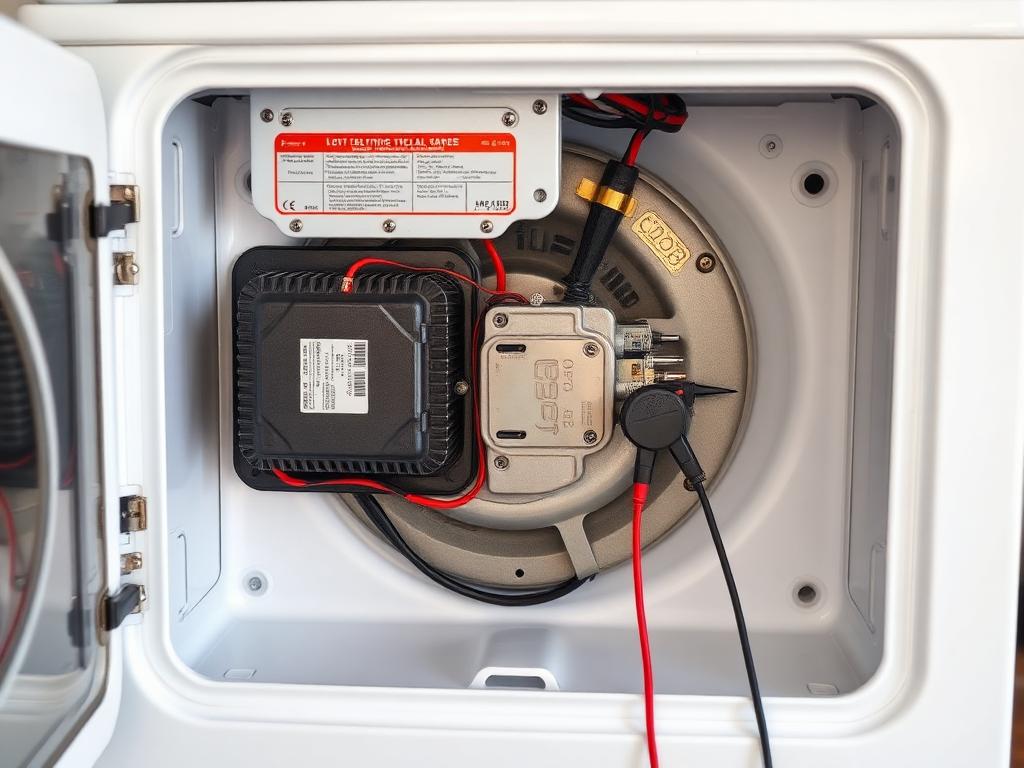
On a heated cycle the timer or control calls for heat, both legs of 240V reach the element circuit through the cycling thermostat and safety devices, and the blower pulls room air across the element, through the drum, and out the exhaust. Heat and airflow are one system: the safety devices exist specifically because restricted airflow overheats the cabinet.
Subsystems in this failure pattern
- Supply: both legs of 240V at the terminal block, breaker and cord
- Heat circuit: element, cycling thermostat, high-limit, thermal fuse, control call
- Airflow: lint filter, blower, transition hose, duct run, outside vent flap
Why this diagnostic order
A dryer with no heat almost always has an airflow story behind it. Checking supply voltage and the exhaust first means that when you do find an open element or thermal fuse, you already know what opened it. Replace the part without clearing the duct and the customer gets the same failure again.
Step 0 · Required
Safety Gate
Confirm every item below before the diagnostic area unlocks. This mirrors the pre-work checklist you owe every customer.
0 of 5 confirmed.
Step 1 · First checks
LockedDiagnostic decision
You are at the machine with the customer standing by. What do you do first?
Complete the safety gate to continue.
Component map
Dryer heat circuit — component view
System layout — relative positions
Progress
Step 1 of 4
- 1
- 2
- 3
- 4